The frameworks
The Four Types of AI Adoption.
From a multi-year study of seven strategy teams across the US, Sweden and Finland — a diagnostic for the social reality of AI inside your organisation.
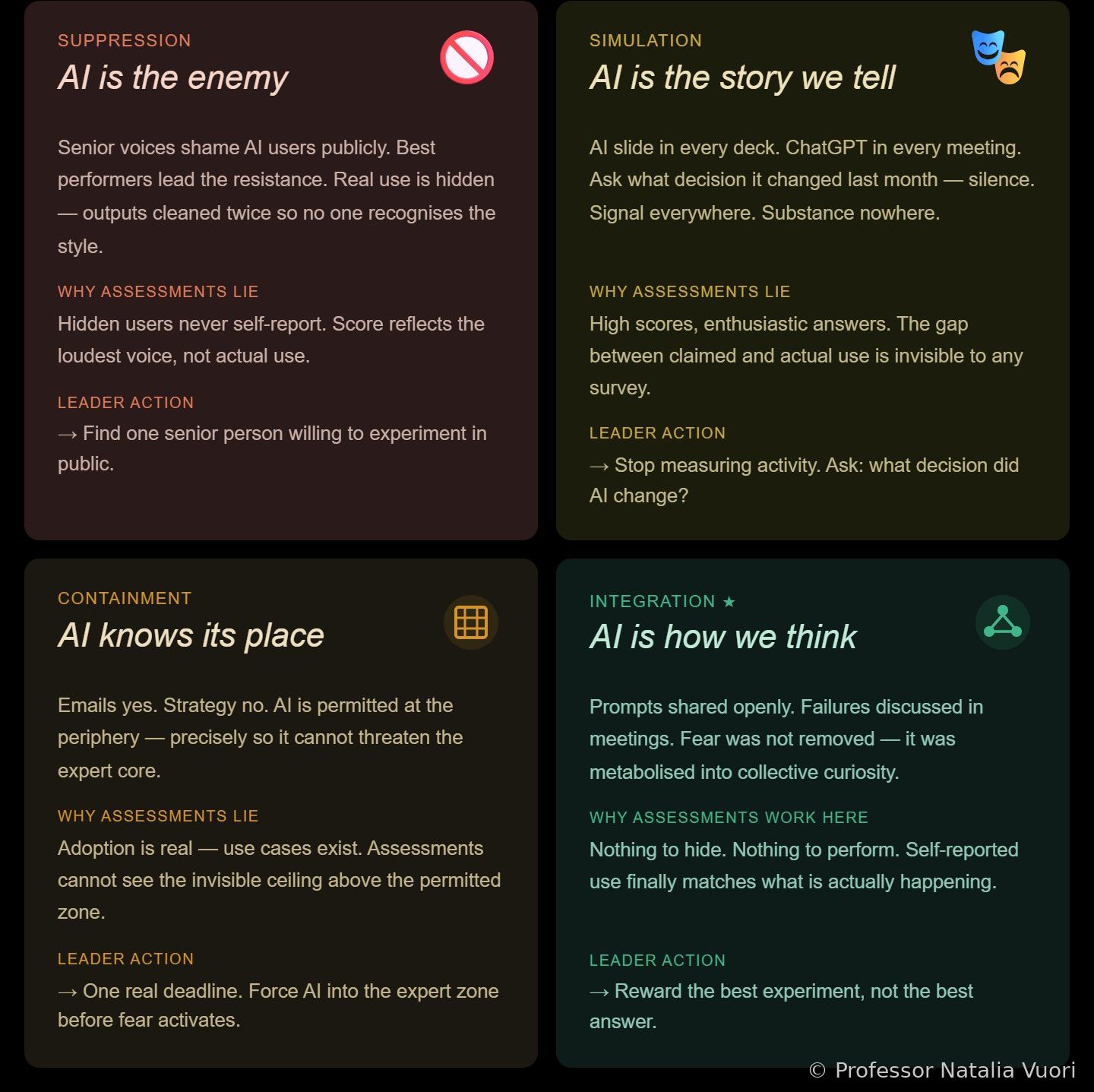
© Professor Natalia Vuori · Vuori (2025), Generative AI in Strategy Work and Firm Performance.
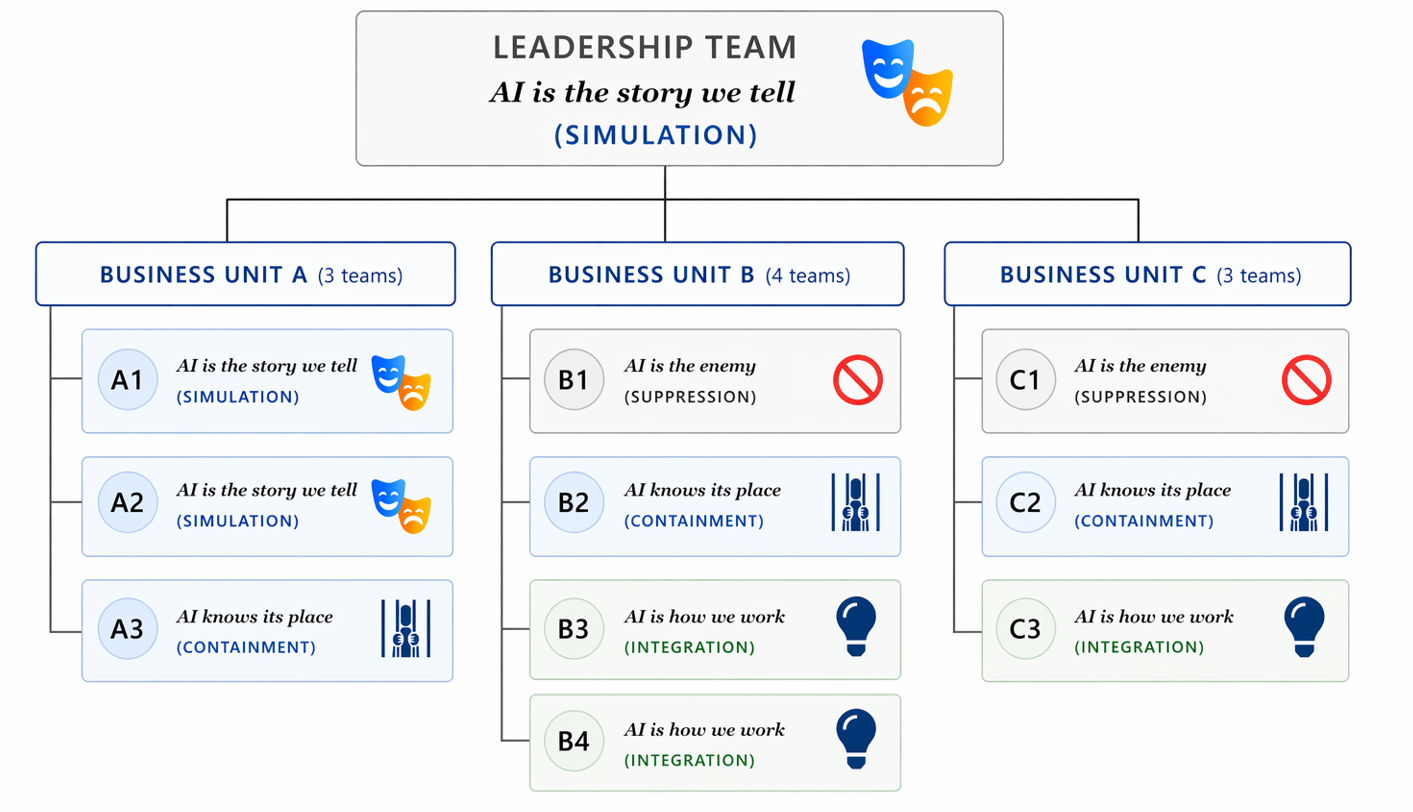
Most companies have more than one type
An organisation rarely sits in a single quadrant — culture fragments across teams.
Two steps
Two steps to facilitate trust and AI adoption.
— step one —
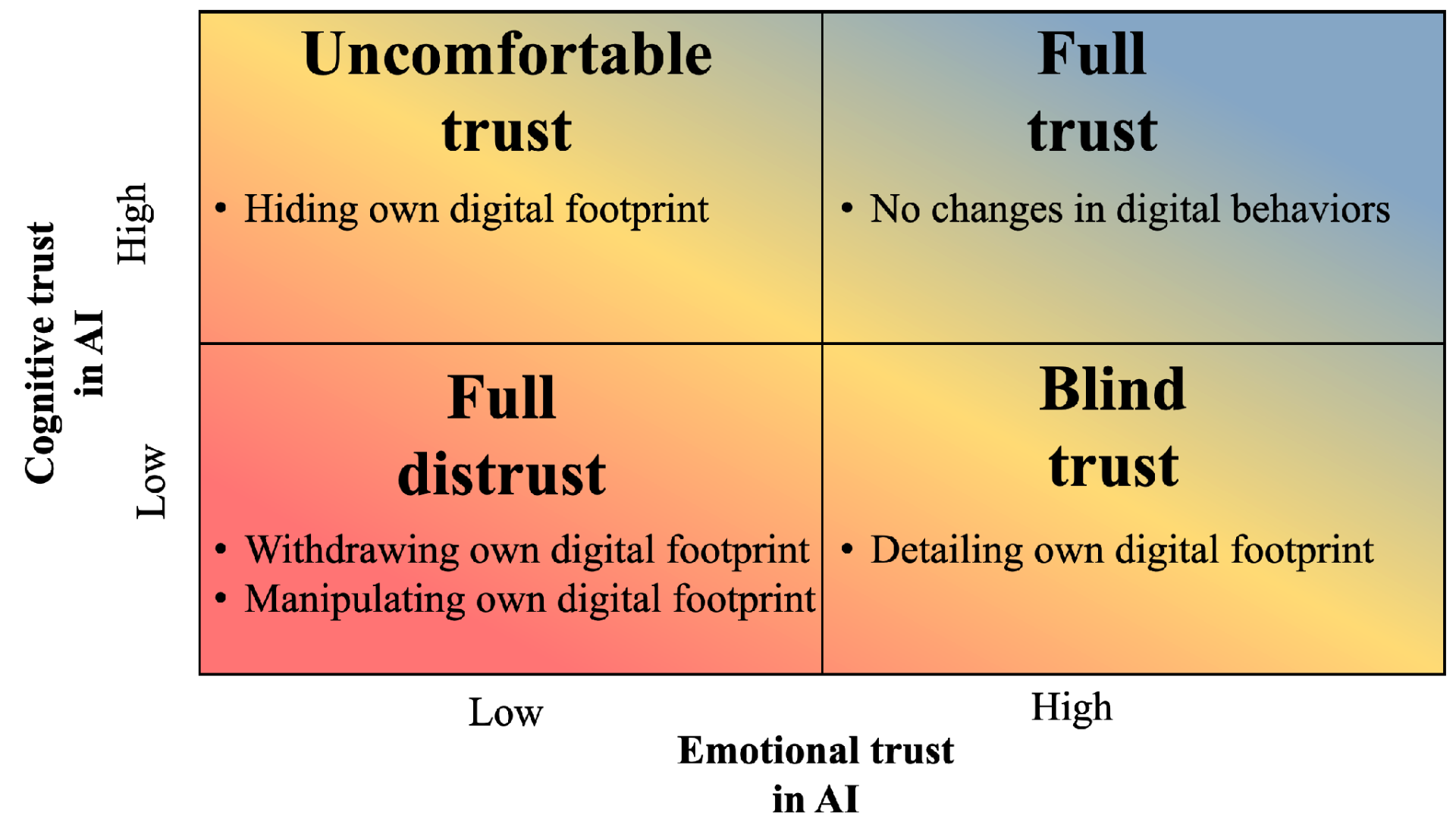
Locate where each person or group sits within the quadrant.
Tip: use an independent third party to ensure honesty.
— step two —
Use targeted actions to guide them toward full or blind trust.
Targeted actions
How to move people toward full trust.
Liking AI
To increase emotional trust
Lead with contagious optimism.
Show genuine excitement about AI’s potential — enthusiasm from leaders sets the emotional tone for the entire organisation.
Share real stories from the front line.
Stories change hearts faster than PowerPoints or roadmaps. Let employees hear from peers who used AI to solve problems, save time, or spark creativity.
Create spaces for honest emotion.
Host open, psychologically safe forums where people can voice fears and frustrations without judgement.
Perception of AI performance
To increase cognitive trust
Set clear performance expectations.
AI isn’t magic — it’s a system that gets smarter with feedback and time.
Turn users into co-pilots, not spectators.
Show people how to use the AI tools you’re adopting, not just hear about them.
Demystify the AI.
Explain in plain language how it works — and why it matters.
Five roles of AI in strategy
AI can assist strategists in all stages of the strategy development process.
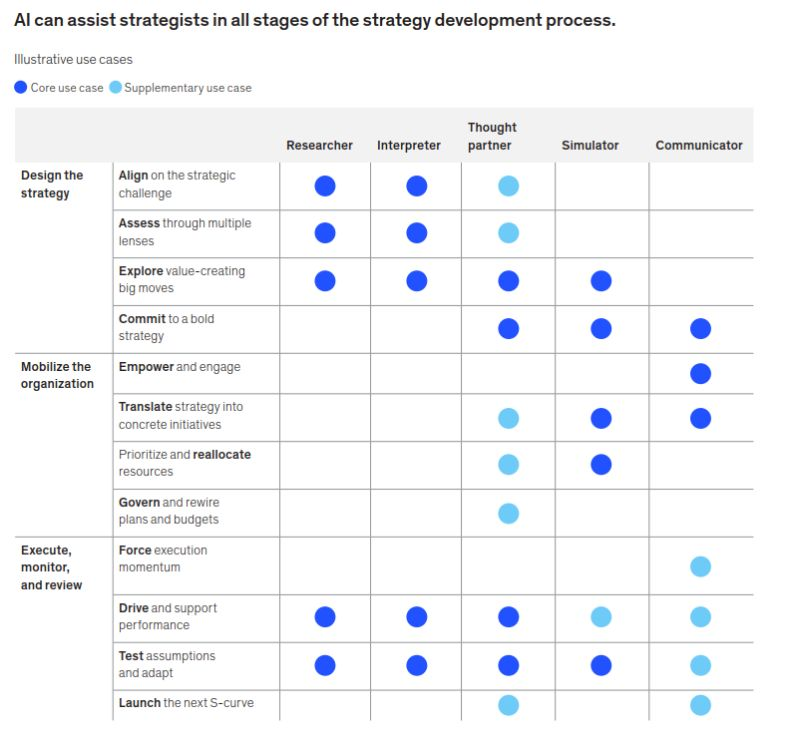
© Professor Natalia Vuori — illustrative roles of AI across the strategy process.
— next step —